A deep Dive: The Manosphere
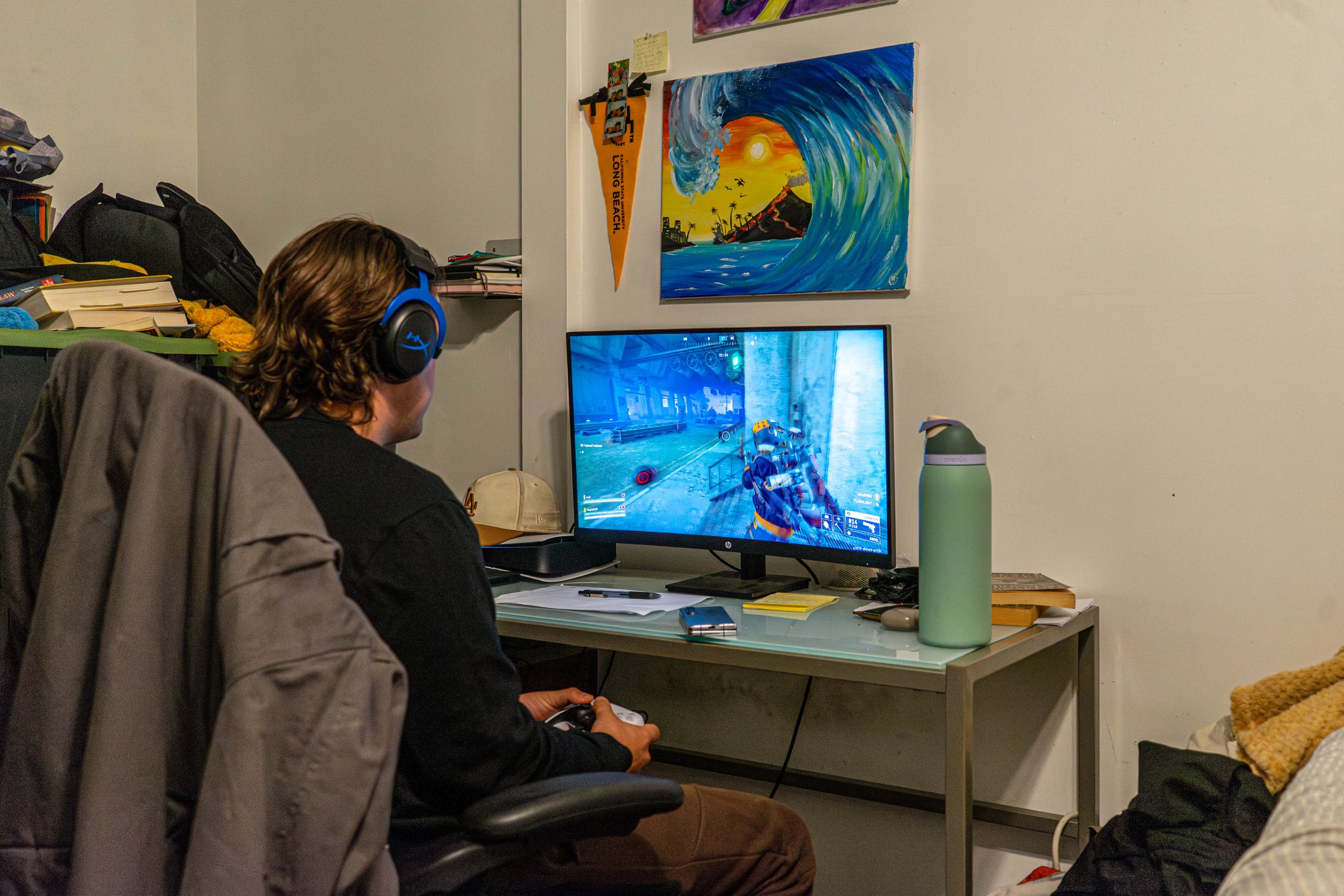
Miqhi Rickson gaming. Photo by Yalina Harris.
Women belong in the kitchen. The only way to be a man is to be a provider. Women should have no rights. The Jews are responsible for the world's evil.
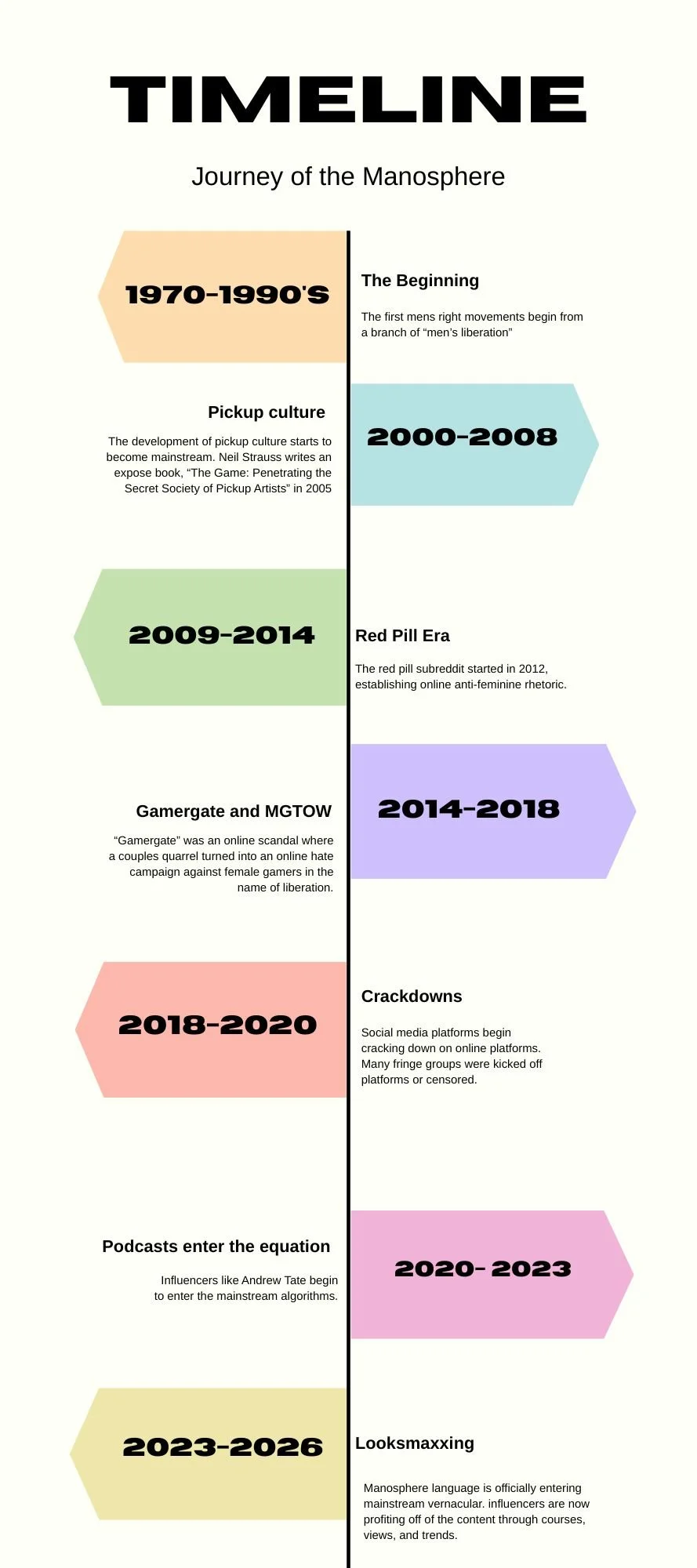
These are common epithets and ideas circulating in online communities. Conversations like this used to be isolated to small internet spheres like 4chan, reddit, or private chatrooms. Today, these misogynistic and hypermasculine beliefs are entering everyday conversations.
With the release of Louis Theroux's new Netflix documentary, “Into the Manosphere,” hypermasculine influencers have found their way into mainstream view. The documentary follows four male influencers: Harrison Sullivan, Nicolas Kenn De Balinthazy, Justin Waller, and Myron Gaines. These influencers typically operate on Kik and Twitch livestreams, pandering to thousands of young male viewers.
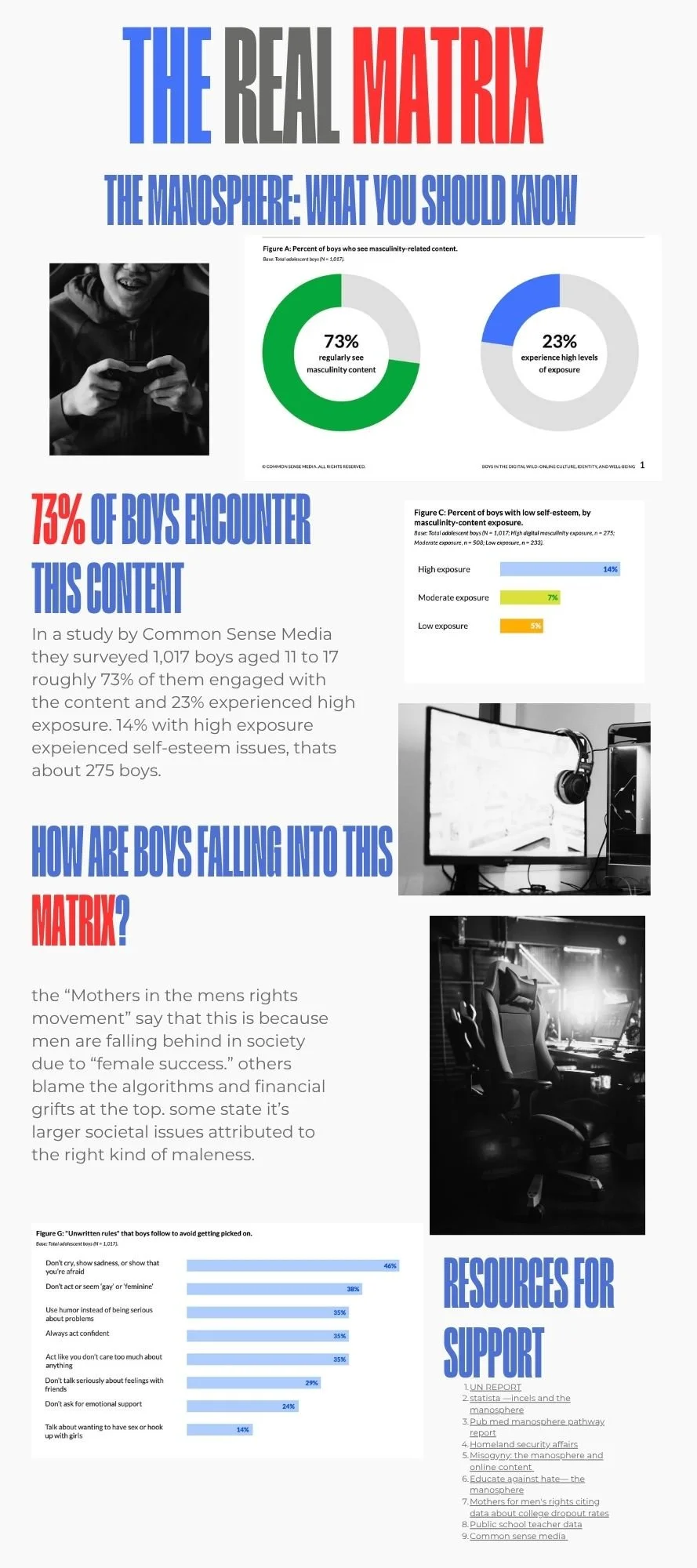
According to the UN Women, the manosphere is a loose network of communities that claim to address men’s struggles, while promoting harmful advice and attitudes. The United Nations Secretary General’s report on violence against women and girls highlights, these groups are united by an opposition to feminism and misrepresent men as “victims” of the current social and political climate.
The term manosphere is broad and begs the question — who is engaging with this content? In a study conducted by the Movember Institute of Men’s Health, researchers surveyed 3,000 men aged 16-25 and roughly 63% of them engaged with masculine influencer content daily.
Many of the men engaging with manosphere content stated that they were more “optimistic” about the state of men in society, but they were also more prone to personal mental health struggle and negative health choices.
Ezekiel Mendez, a third-year Liberal studies student at California State University, Long Beach, offered a male perspective.
“I like consuming content that people make. When it comes to podcasts, I like the questions behind the podcast, but if I feel like something is misogynist, I scroll past. I feel like there's no substance,” he said.
While some resist the Manospheres pull, the effects are still real. Dr. Lori Baralt, a professor and department chair of the women’s, gender, and sexuality studies at CSULB said young men may be turning to the manosphere partially because the influencers and algorithms are playing on societal fears.
“Fears and stressors like when you're feeling like, ‘I'm not getting into college, or I can't get a good job, or I'm having trouble finding people to date.’ I think whenever people have that sense of loneliness or anger, you're channeling it somewhere,” Baralt said. “I think that's what the manosphere kind of takes advantage of.”
Baralt's view is a sentiment shared by many, but teeters a controversial line, and questions whether men are the architects of their own victimization or victims themselves. In a complex social landscape — made worse by online culture — two things can be true at once.
Dr. Shira Tarrant, a professor in the women's, gender, and sexuality studies department at CSULB, said that questioning the content and the men engaging with this content is a better solution than blaming all men.
“ I think that we ought to be aware, and I think that if we're not aware of what the content is and we are just sticking our heads in the sand or just scrolling our own particular algorithms it doesn't serve us well,” Dr. Tarrant said.
The manosphere is riddled with misogynistic views and while that seems harmless when kept online, there is some real-world intersection with the political sphere and conspiracy theories. Many of the male influencers helped endorse the Trump campaign, with Trump's son Barron Trump engaging with some of the content.
Male influencers like Harrison Sullivan, and Nicolas Kenn De Balinthazy featured in the Louis Theroux documentary, have continuously repeated antisemetic rhetoric, such as “I hate jews,” while claiming to not be antisemetic.
All this raises a broader question: Is the manosphere truly a problem that can be solved, and is it dangerous to society? The answer is one that experts like Dr. Tarrant will continue to question and investigate.
“I don't believe that boys and men are just horrid people who wanna find the most damaging harmful positions in life,” Tarrant said. “We should ask, What's the vacuum for them? What's the wound? What are they not getting? And if we're aware of those things, can we figure out good solutions?”